
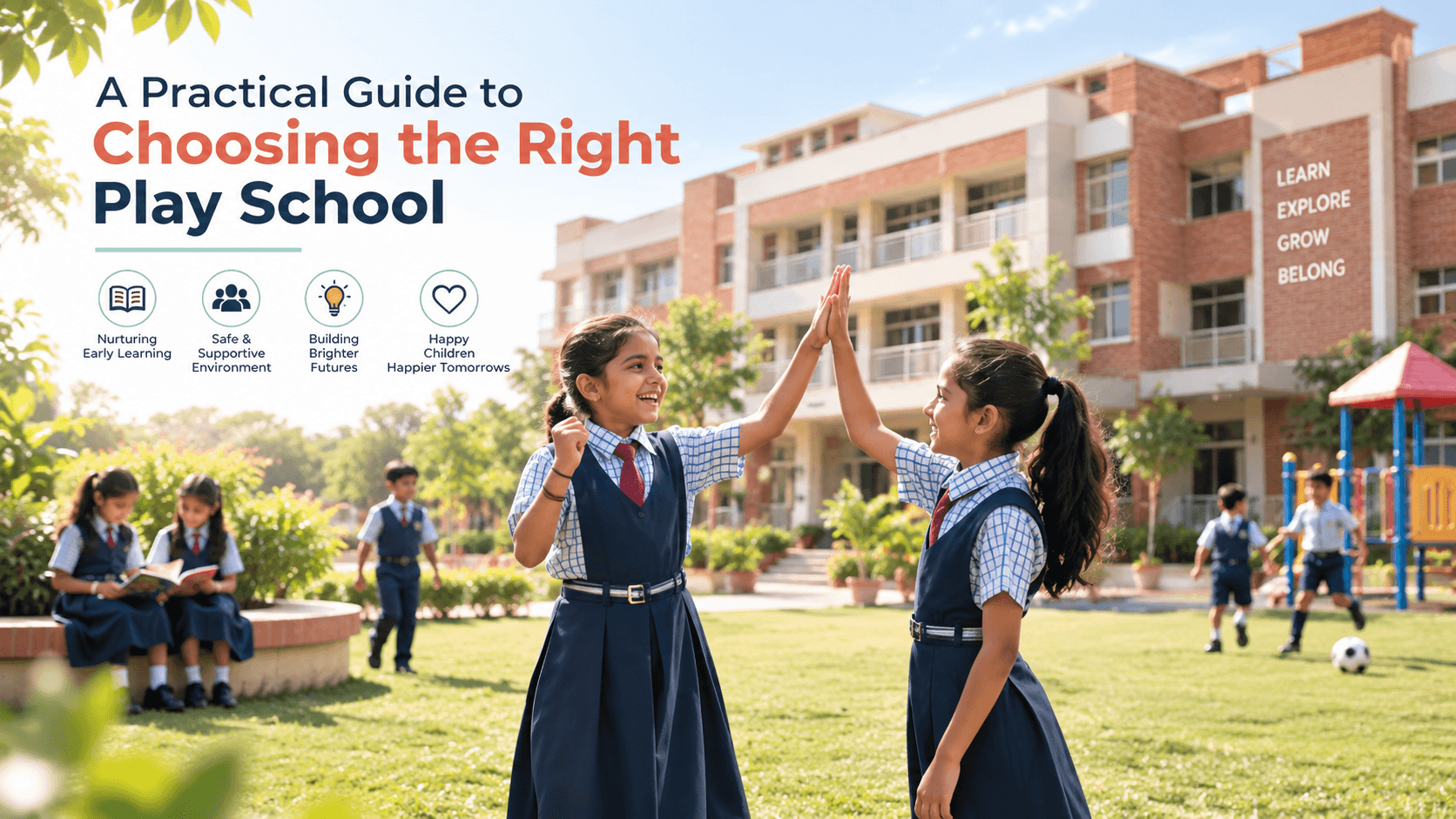
Choosing an early learning environment is an important decision because the first years of education influence how children respond to learning, relationships, routines, and new experiences. Parents often compare facilities, teaching approaches, class sizes, and daily schedules before deciding what feels appropriate. When exploring options such as a play school in mahisagar, it is useful to look beyond appearances and understand what genuinely supports a young child’s development. Crystal School offers parents a reference point for thinking about education as a complete experience rather than simply a place where children spend their mornings.
Understanding What Early Learning Should Offer
At the early childhood stage, learning is closely connected with exploration. Children benefit from opportunities to communicate, move, create, observe, and interact with others. A strong environment should therefore balance guided activities with enough flexibility for children to develop curiosity at their own pace.
Parents can consider whether the setting provides:
- Age-appropriate activities that encourage language, movement, creativity, and problem-solving
- Predictable routines that help children feel comfortable and secure
- Opportunities for social interaction and cooperative play
- Teachers who communicate patiently and respond to individual needs
- A clean, organised, and child-friendly physical environment
The goal is not to make young children follow an overly academic schedule. Early education should gradually build the habits and confidence that make later learning easier.
Comparing Play-Based Learning Approaches
Different schools may use similar terminology while following very different classroom practices. Parents researching the best preschools in mahisagar should therefore examine how learning actually happens during a typical day rather than relying only on brochures or infrastructure.
Play-based learning can include storytelling, role play, art, music, puzzles, sensory activities, outdoor movement, and guided conversations. These experiences can introduce early concepts while allowing children to participate actively.
A useful comparison can focus on practical differences:
| Area to Compare | What Parents Can Look For |
| Classroom approach | Active participation rather than prolonged passive instruction |
| Teacher interaction | Warm, patient, and age-appropriate communication |
| Daily routine | A healthy balance of learning, play, movement, meals, and rest |
| Activities | Variety that supports language, motor, social, and creative development |
| Parent communication | Clear updates about routines, progress, and concerns |
Observing these details can provide more meaningful information than judging a school solely by its facilities.
Preparing Children for Their Next Stage
Early education should also create continuity. Children eventually move into environments where expectations around attention, communication, independence, and classroom participation become greater. A thoughtful foundation can make that transition more comfortable without rushing children into formal academics.
Parents can observe whether children are encouraged to:
- Express their thoughts and needs clearly.
- Follow simple instructions independently.
- Share materials and participate with peers.
- Complete age-appropriate tasks with growing confidence.
- Handle small changes in routine with support.
These skills are valuable because school readiness involves more than recognising letters or numbers. Emotional regulation, communication, independence, and social confidence also influence how comfortably a child adapts to a structured setting.
What to Expect From Nursery Learning
The nursery stage can bring a noticeable shift in expectations, which is why families considering the best nursery school in mahisagar should look carefully at how children are supported during this period. Learning should remain developmentally appropriate while gradually introducing greater structure.
Teachers may begin encouraging children to listen for longer periods, communicate more clearly, recognise patterns, develop fine motor control, and participate in group activities. These experiences should feel manageable rather than overwhelming.
It is also worth considering how the school responds when a child learns differently from classmates. Individual differences in language development, confidence, attention, and social interaction are normal. A supportive environment recognises these differences without unnecessarily comparing children.
Making a Thoughtful Choice
Once parents have shortlisted suitable options, visiting the school can help turn online research into a more informed decision. Pay attention to how adults speak to children, whether children appear engaged, and whether the environment feels orderly without being overly restrictive.
Practical considerations matter too. These may include travel time, operating hours, safety procedures, communication methods, activity schedules, and the overall daily routine. A school that looks impressive on paper may not necessarily match a particular child’s temperament or family circumstances.
The best decision is usually one based on several factors together rather than a single feature. Parents should feel comfortable asking questions and taking time to understand how the school approaches everyday learning and care.
FAQs
What age is generally suitable for starting early education?
The appropriate age varies by child. Readiness, independence, communication, and comfort with separation can all be considered alongside age.
Should young children receive formal academic instruction?
Early academic exposure can be useful when it is age-appropriate. However, play, communication, movement, creativity, and social development should remain important parts of the experience.
How can parents assess a classroom environment?
Observe teacher-child interactions, activity variety, classroom routines, cleanliness, and whether children appear comfortable and engaged.
Is infrastructure the most important factor?
Not necessarily. Facilities matter, but teaching practices, relationships, safety, routines, and developmental suitability are equally important.
What should parents ask during a school visit?
Ask about daily schedules, teacher qualifications, class size, communication with families, safety procedures, activities, and how individual learning needs are handled.
Conclusion
Choosing an early learning environment requires attention to both educational quality and everyday suitability. Parents can make a stronger decision by observing teaching practices, understanding classroom routines, considering developmental needs, and evaluating how comfortably their child may adapt. For families researching preschool admission in mahisagar, the most useful approach is to compare options thoughtfully and select an environment that supports curiosity, confidence, independence, and a positive relationship with learning from the beginning.