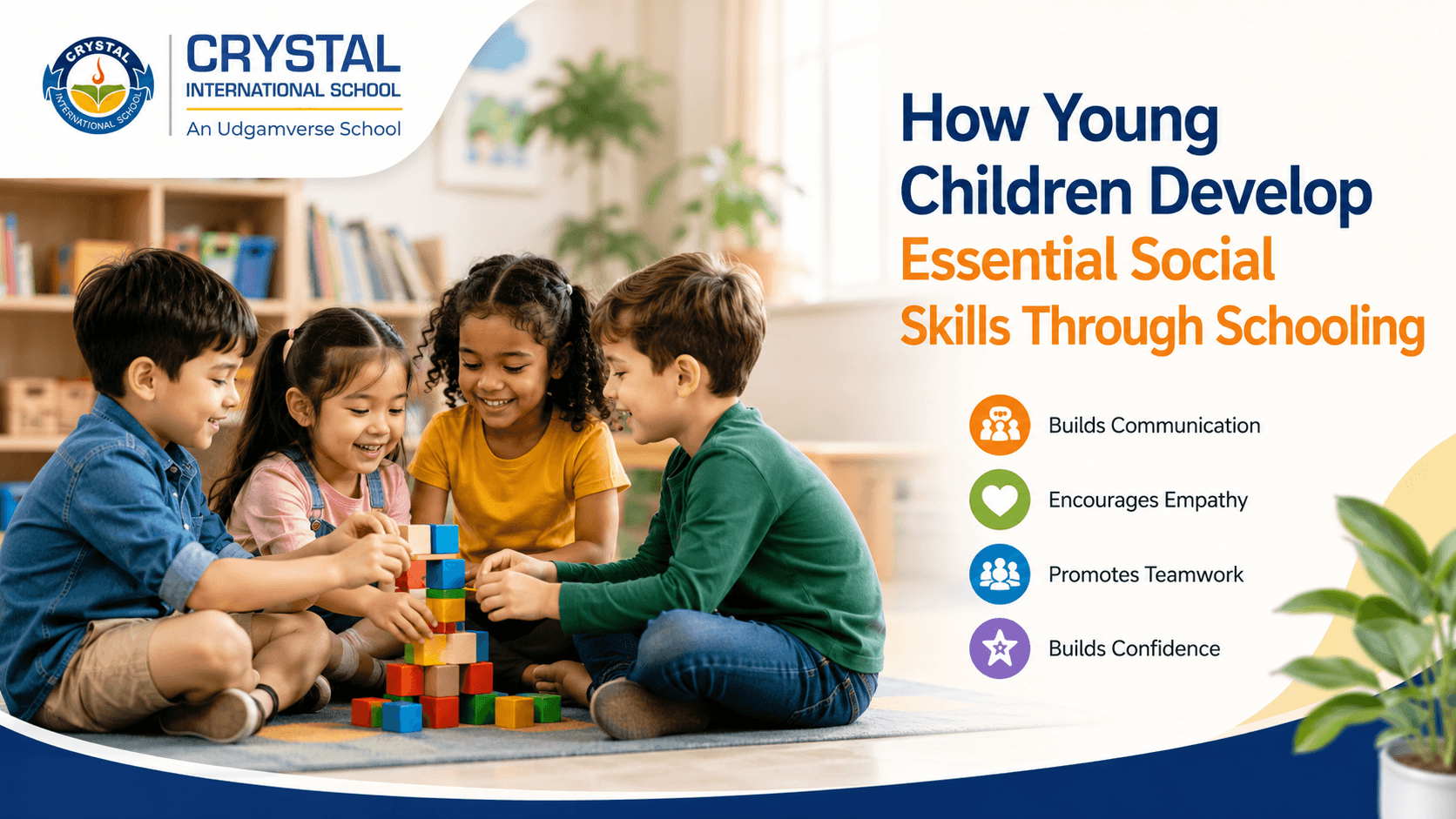
Social skills are among the most important abilities children develop during their early years. These skills help them communicate effectively, build relationships, understand emotions, and work cooperatively with others. While families play a crucial role in a child’s social development, formal schooling provides a structured environment where these abilities can grow through daily interactions and guided activities. For many parents exploring a play school in Mahisagar, understanding how educational settings support social development can help them make informed decisions about early childhood learning.
The Importance of Social Skills in Early Childhood
Social skills form the foundation of healthy relationships and positive communication throughout life. During the preschool years, children begin learning how to express their feelings, share resources, follow instructions, and engage with peers.
Strong social skills contribute to:
- Better communication abilities
- Increased confidence in group settings
- Improved emotional awareness
- Greater cooperation with others
- Enhanced problem-solving skills
These abilities support children’s academic experiences and prepare them for future personal and professional interactions.
Learning Through Daily Interaction
One of the greatest benefits of early schooling is the opportunity for regular interaction with peers and educators. Many of the best preschools in Mahisagar focus on creating environments where children can learn through collaboration, play, and guided communication.
Daily classroom activities encourage children to:
- Take turns during games
- Participate in group discussions
- Share materials and resources
- Listen to different viewpoints
- Build friendships
These experiences help them understand social expectations and develop skills that may be difficult to learn in isolation.
How Structured Activities Encourage Cooperation
Schools often use structured activities to teach cooperation and teamwork. Through group projects, storytelling sessions, creative play, and classroom routines, children learn how to work alongside others toward shared goals.
The following table highlights common school activities and the social skills they help develop:
| Activity | Social Skill Developed |
| Group Play | Cooperation |
| Storytelling Sessions | Listening Skills |
| Classroom Discussions | Communication |
| Team-Based Activities | Collaboration |
| Role-Playing Exercises | Empathy and Understanding |
By participating in these activities regularly, children gain practical experience in navigating social situations and building meaningful connections.
Building Confidence Through Guided Learning
Confidence plays an important role in social development. When children feel secure and supported, they are more likely to participate in conversations, ask questions, and engage with others.
For families considering preschool admission in Mahisagar, it is useful to understand that early educational environments often provide opportunities for children to practice social interaction in a safe and encouraging setting.
Teachers guide students through challenges such as resolving disagreements, expressing emotions appropriately, and understanding social boundaries. These experiences help children become more comfortable interacting with different people and adapting to new situations.
Emotional Intelligence and Long-Term Development
Social skills are closely connected to emotional intelligence. As children interact with classmates and teachers, they learn to recognize emotions in themselves and others.
Key aspects of emotional development include:
- Understanding feelings
- Practicing empathy
- Managing frustration
- Respecting differences
- Responding appropriately to social situations
Developing emotional intelligence during early childhood can contribute to stronger relationships, better decision-making, and improved adaptability later in life.
School environments provide opportunities for children to encounter a variety of perspectives and experiences, helping them become more aware of the needs and feelings of others.
Frequently Asked Questions
1. Why are social skills important for young children?
Social skills help children communicate effectively, build friendships, cooperate with others, and develop confidence in different environments.
2. How do schools support social development?
Schools provide structured activities, group interactions, and guided learning experiences that encourage communication, teamwork, and emotional growth.
3. Can social skills affect academic success?
Yes. Children who communicate well, follow instructions, and collaborate with peers often adapt more easily to classroom environments and learning activities.
4. What role do teachers play in social skill development?
Teachers guide children through interactions, encourage positive behavior, and help them navigate social challenges in constructive ways.
5. How can parents support social learning at home?
Parents can encourage conversations, cooperative play, sharing, and activities that help children practice communication and empathy.
Conclusion
The early years of education play a significant role in helping children develop essential social skills that support lifelong success. Through interaction, collaboration, structured activities, and emotional learning, children gain valuable tools for building relationships and communicating effectively. These experiences help them become confident, empathetic, and socially aware individuals. For families evaluating options such as the best nursery school in Mahisagar, understanding the importance of social development can be an important part of the decision-making process. Educational institutions like Crystalschool contribute to this broader goal by supporting early childhood learning and development in structured environments.