
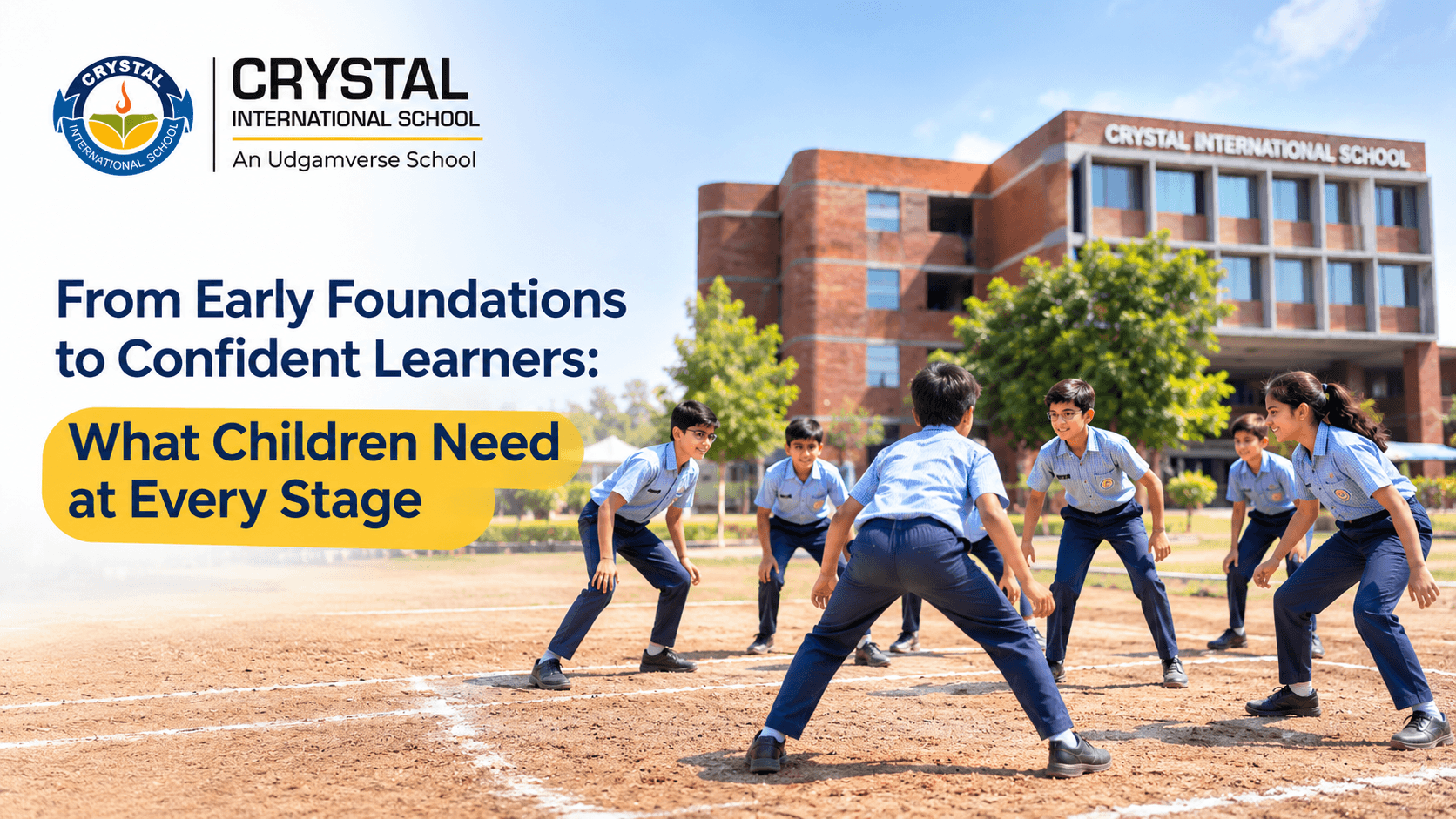
A child’s educational journey is not a single transition from home to a classroom. It is a gradual process of discovering interests, developing relationships, learning new skills and becoming more independent. Parents comparing primary schools in mahisagar should therefore consider how an institution supports children as their needs change with age. Crystal School is one option families can explore when assessing the learning environment, academic approach and opportunities available during these formative years.
Understanding the differences between early childhood education and primary schooling can help parents make decisions that support both present needs and future development.
1. Recognising How Learning Changes as Children Grow
Young children learn differently from older students. In the early years, play, movement, conversation and sensory exploration are central to understanding the world. As they grow, they gradually become more capable of following structured lessons, concentrating for longer periods and working independently.
This transition should be gradual rather than abrupt. Early experiences with stories, building activities, drawing and group games introduce foundational skills. Later, these experiences become stepping stones towards reading comprehension, written expression, mathematical reasoning and more organised academic work.
A good educational environment recognises that development does not happen at exactly the same pace for every child. Some may communicate confidently but need more time with writing. Others may enjoy numbers while taking longer to participate in group discussions. Teachers who observe these differences can guide children without creating unnecessary pressure.
2. What Makes an Early Learning Environment Effective
Choosing a preschool in mahisagar involves looking beyond colourful classrooms and attractive activity schedules. Parents should understand how the school uses its environment to encourage meaningful participation.
For young learners, the classroom should offer a balance of exploration, interaction and routine. Materials such as picture cards, puzzles, blocks, storybooks and art supplies give children different ways to engage with ideas. Activities should be age-appropriate and designed to encourage participation rather than simply keep children occupied.
Teacher-child interaction is equally important. Children benefit from patient explanations, clear instructions and encouragement when they attempt something unfamiliar. A teacher who notices when a child feels hesitant can offer reassurance and help them gradually join an activity.
Parents can ask about:
- How the daily schedule balances active play and quieter tasks.
- Whether children have opportunities for creative expression.
- How teachers respond to emotional or behavioural difficulties.
- How progress and classroom experiences are communicated to families.
These details offer a clearer picture of the educational experience than facilities alone.
3. Developing Skills That Support Long-Term Progress
School readiness involves much more than recognising letters or counting objects. Children also need opportunities to develop communication, coordination, emotional awareness and social understanding.
For example, participating in a group storytelling activity helps children listen, remember details and express ideas. Completing a simple craft project can develop hand-eye coordination, patience and the ability to follow steps. Outdoor games introduce movement while helping children understand cooperation and shared rules.
As children enter more structured grades, these abilities support classroom participation. A student who can ask for clarification, organise materials and work alongside classmates may find academic routines easier to manage.
The following progression illustrates how different experiences can contribute to development:
| Learning experience | Skill it can encourage | How it helps later |
| Storytelling | Listening and vocabulary | Reading comprehension |
| Sorting objects | Classification and observation | Mathematical reasoning |
| Drawing and crafts | Fine motor coordination | Writing readiness |
| Group games | Cooperation and communication | Collaborative learning |
| Independent tasks | Responsibility | Self-directed study |
These are gradual learning opportunities, not milestones that every child must achieve at a particular age.
4. Creating a Positive Bridge Between Play and Formal Education
A play school in mahisagar can introduce children to the social and learning routines that become more structured in later grades. The value of this stage lies in helping children become comfortable with a classroom environment while preserving the curiosity that makes early learning engaging.
A thoughtful transition allows children to move from open-ended exploration towards activities with clearer instructions and learning objectives. For instance, building with blocks may initially involve free play. Later, a teacher might encourage children to compare sizes, identify shapes or create a structure according to a simple plan.
This approach connects familiar experiences with emerging academic concepts. It also helps children practise listening, following instructions and completing activities without removing opportunities for creativity.
Parents should ask how the school prepares students for the next grade. Understanding the relationship between early learning activities and future classroom expectations can help families assess whether the transition is likely to feel manageable.
5. Making a School Choice That Works for the Family
The most suitable school is not necessarily the one with the longest activity list or the most impressive campus. It is the one whose educational approach, expectations and practical arrangements fit the child’s needs and the family’s circumstances.
During a visit to Crystal School, parents can observe how children interact with teachers, whether learning resources are accessible and how the school day is organised. They should also clarify practical matters such as timings, transport, fees, safety procedures and communication channels.
Consider discussing the following before making a decision:
- How are children supported when they struggle to adjust?
- What opportunities are available for sports and creative activities?
- How does the school identify and respond to different learning needs?
- What information do parents receive about progress?
- How are transitions between grades managed?
A conversation with the school, supported by direct observation, can help parents move beyond assumptions and understand the everyday experience their child may have.
Frequently Asked Questions
1. How is preschool different from primary education?
Preschool focuses more on play, exploration and foundational development, while primary education introduces increasingly structured academic learning.
2. What should parents look for in an early learning classroom?
Look for age-appropriate resources, supportive teachers, a balanced routine and opportunities for children to participate actively.
3. How can parents prepare children for primary school?
Establish predictable routines, encourage communication, practise simple independent tasks and introduce reading through enjoyable shared activities.
4. Is academic performance the only measure of school readiness?
No. Social interaction, emotional confidence, communication and independence are also important parts of readiness.
Conclusion
A strong educational foundation develops through consistent support, meaningful experiences and age-appropriate expectations. When considering preschool admission in mahisagar, parents should look at how the early learning experience connects with the child’s next educational stages. Choosing an environment that values curiosity, confidence and gradual independence can help children approach future learning with greater readiness and enthusiasm.

No comment