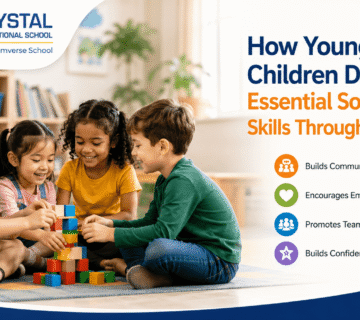

Early childhood represents a crucial phase in human development, where emotional awareness and social understanding begin to take shape. During these formative years, structured learning environments play a vital role in guiding children beyond home-based interactions. Exposure to thoughtfully designed early education settings allows young learners to understand emotions, develop relationships, and build confidence in shared spaces. This foundation becomes especially significant for families exploring the best preschools in mahisagar, where emphasis extends beyond basic academics to include emotional wellbeing and social readiness.
Emotional Awareness Through Daily Interaction
One of the earliest benefits of preschool education lies in helping children recognise and express emotions appropriately. Daily routines introduce situations that encourage sharing feelings, managing frustration, and responding to peers with empathy. Guided activities help children label emotions such as happiness, sadness, or excitement, allowing them to develop emotional vocabulary and self-awareness.
Teachers play a subtle yet influential role by modelling calm responses and encouraging reflection. Over time, children learn that emotions are manageable and that expressing them constructively leads to positive outcomes.
Learning to Build Relationships
Preschool environments introduce children to peer groups where cooperation becomes essential. Group play, collaborative tasks, and shared responsibilities teach the basics of friendship and teamwork. Children begin to understand concepts such as taking turns, listening, and respecting boundaries.
These experiences foster trust and mutual understanding, laying the groundwork for healthy relationships. Exposure to diverse personalities helps learners adapt socially and appreciate different perspectives, an essential skill for later life.
Developing Independence and Self-Confidence
Structured early learning settings encourage age-appropriate independence. Simple tasks such as organising belongings, choosing activities, or completing small responsibilities help children gain confidence in their abilities. This independence supports emotional resilience and decision-making skills.
As children achieve small milestones independently, their sense of self-worth strengthens. This confidence allows them to approach new situations with curiosity rather than hesitation.
Communication Skills and Emotional Expression
Language development is closely tied to emotional growth. Preschool classrooms provide rich opportunities for conversation, storytelling, and expressive play. Children learn to articulate thoughts, ask questions, and respond to others, strengthening both verbal and non-verbal communication.
Through guided discussions and role-play, children practise expressing needs and resolving minor conflicts verbally. These early communication skills reduce frustration and support emotional regulation.
Structured Play as a Learning Tool
Play-based learning remains central to emotional and social development. Activities such as imaginative play, art, and music allow children to explore feelings in a safe and creative manner. Group games encourage cooperation and introduce concepts of fairness and shared goals.
In regions where families seek a supportive nursery school in mahisagar, such play-driven approaches help children balance enjoyment with learning, ensuring emotional growth occurs naturally rather than through instruction alone.
Understanding Rules and Social Boundaries
Preschool settings gently introduce children to structured expectations. Simple guidelines around behaviour, routines, and group activities help children understand boundaries and social norms. Learning to follow these guidelines fosters discipline and respect for others.
Importantly, these rules are reinforced through positive guidance rather than strict enforcement. This approach helps children internalise behavioural expectations without fear or anxiety.
Emotional Resilience Through Guided Challenges
Early learning environments present manageable challenges that encourage perseverance. Whether completing a puzzle or participating in group tasks, children learn to cope with setbacks and celebrate achievements. Teachers provide reassurance and support, helping children navigate emotions linked to success and disappointment.
Such experiences strengthen emotional resilience, preparing children to handle future academic and social challenges with greater confidence.
Role of Educators in Emotional Development
Educators trained in early childhood development understand the importance of emotional safety. Their role extends beyond instruction to observation and guidance. By recognising individual emotional needs, teachers adapt interactions to support each child’s growth.
This personalised attention ensures that children feel valued and understood, creating a secure environment where emotional development can flourish.
Preparing for Formal Education Transitions
Preschool experiences ease the transition into formal education by familiarising children with structured environments and social expectations. Exposure to routines, peer collaboration, and guided learning reduces anxiety associated with new academic settings.
Families considering options such as a nursery school in lunawada often prioritise this preparatory aspect, recognising that emotional readiness is as important as academic preparedness.
Long-Term Benefits of Early Emotional Learning
The social and emotional competencies developed during preschool years extend well beyond early childhood. Children who learn empathy, communication, and self-regulation early tend to demonstrate stronger interpersonal skills and adaptability later in life.
These attributes support academic success, leadership potential, and overall wellbeing, highlighting the lasting value of early emotional education.
Core Social and Emotional Skills Nurtured in Preschool
- Emotional recognition and expression
- Cooperative play and relationship building
- Independent decision-making
- Effective communication and listening
- Resilience and adaptability
Conclusion: Building Strong Foundations for Lifelong Growth
Preschool education serves as a vital bridge between home and formal learning, shaping emotional intelligence and social confidence during critical developmental years. By fostering empathy, independence, and communication, early learning environments prepare children for future academic and personal success. Choosing a preschool in mahisagar involves recognising institutions that prioritise emotional wellbeing alongside learning. Within this context, Crystal school reflects the importance of nurturing balanced growth during the earliest stages of a child’s educational journey.