
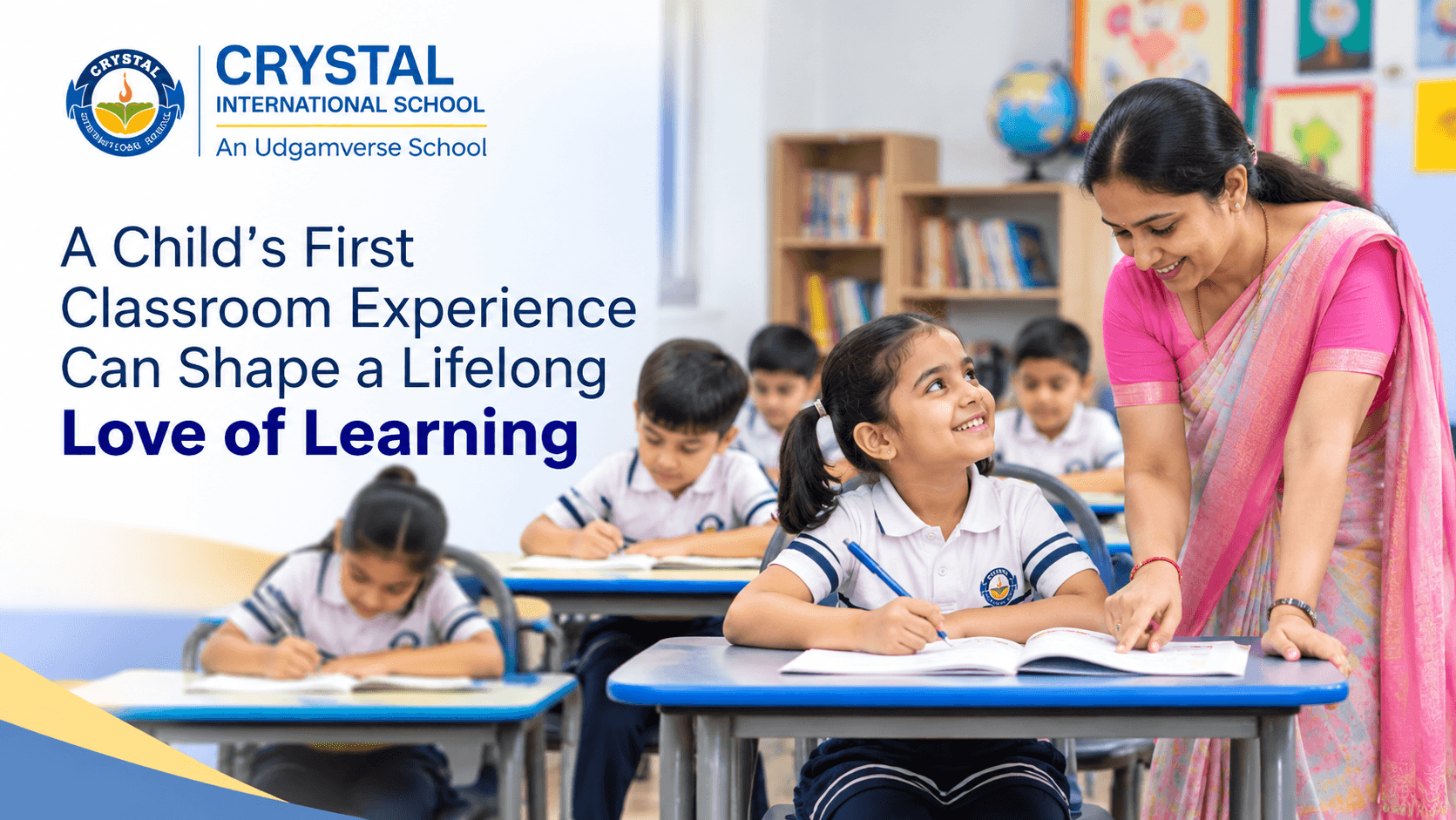
Starting school is a significant milestone for young children and their families. For many, it is the first time they spend an extended period away from home, interact with a larger peer group and follow a routine beyond the familiar family environment. Choosing a play school in mahisagar therefore involves more than finding a nearby classroom. Parents should consider whether the setting makes children feel secure, encourages exploration and respects their individual pace of development. Crystal School can be one of the options families explore while understanding what a positive early learning experience should look like.
1. Why the Early Years Need a Different Approach to Learning
Young children learn through movement, observation, imitation, conversation and play. Their attention spans and abilities are still developing, so early education should not resemble a miniature version of formal schooling.
A thoughtfully planned early-years environment introduces basic concepts through enjoyable, age-appropriate experiences. Children might learn colours by sorting objects, develop language through picture books or explore numbers while arranging blocks. These activities help them connect words and ideas with things they can see and touch.
Play also creates opportunities to practise essential social behaviours. Sharing materials, waiting for a turn and participating in group activities introduce cooperation gradually. Children may need reminders and adult support while learning these skills, which makes patient guidance particularly important.
The aim at this stage is not to make every child perform at the same level. It is to build curiosity, confidence and readiness for more structured learning over time.
2. Preparing Your Child for the First School Admission
The process of preschool admission in mahisagar can bring practical questions as well as emotional uncertainty. Parents may wonder when to apply, what documents are needed and whether their child is ready to begin.
Before approaching a school, consider a few factors:
- Age eligibility: Check the age criteria for the relevant programme and academic session.
- Daily routine: Consider whether your child is beginning to manage meals, rest and basic personal needs with some independence.
- Communication: Observe how your child expresses needs, responds to simple instructions and interacts with familiar people.
- School requirements: Ask about application forms, birth certificates, photographs, interaction procedures and important dates.
Children do not need to master every self-care skill before joining preschool. The transition itself can help them develop independence, provided expectations are realistic and adults offer appropriate support.
During the admission conversation, parents should ask how the school introduces new children to the classroom, communicates with families and handles separation anxiety. These details can reveal how carefully the transition is planned.
3. What a Supportive Classroom Looks Like
A welcoming classroom gives children room to explore without making them feel overwhelmed. The arrangement of furniture, availability of age-appropriate materials and opportunities for movement can all influence how comfortable children feel.
Look for spaces where children can participate rather than simply sit and listen. Picture books, puzzles, building materials, drawing supplies and pretend-play resources can encourage different forms of expression.
The teacher’s approach is equally significant. Young learners benefit from adults who explain instructions clearly, acknowledge feelings and redirect behaviour calmly. For example, when two children want the same toy, a teacher can guide them towards taking turns instead of treating the disagreement only as misbehaviour.
A balanced day should also include a rhythm of active and quieter experiences. Songs, stories, creative tasks, outdoor play and rest periods help prevent the day from becoming either overly demanding or unstructured.
4. Building a Strong Foundation for Later Schooling
As children grow, they gradually move from exploratory activities towards more organised academic learning. Parents comparing cbse schools in mahisagar should understand how early education prepares children for this progression without placing unnecessary pressure on them.
Readiness involves several interconnected areas:
| Developmental area | Early learning experiences |
| Language | Listening to stories, naming objects and having conversations |
| Early mathematics | Sorting, matching, counting and recognising patterns |
| Physical coordination | Drawing, stacking, movement games and outdoor play |
| Social development | Sharing, cooperating and participating in group activities |
| Emotional awareness | Naming feelings and practising simple calming strategies |
These foundations support later classroom participation. A child who is comfortable asking for help, following a simple routine and expressing ideas may find the transition to formal learning more manageable.
Parents should also remember that children develop at different rates. Early education should provide opportunities for growth rather than turn developmental milestones into a competition.
5. Helping Children Settle Into a New Routine
The first few weeks may involve excitement, hesitation or occasional tears. A predictable routine at home can make the adjustment easier. Parents can begin by gradually establishing a consistent bedtime, morning schedule and mealtime routine before the school term starts.
It may also help to:
- Talk positively and realistically about what happens at school.
- Practise short periods of separation with trusted caregivers.
- Encourage simple independence, such as putting away toys.
- Listen to the child’s experiences without immediately correcting their feelings.
- Maintain communication with teachers about recurring concerns.
Avoid comparing one child’s adjustment with another’s. Some children become comfortable quickly, while others need more time and reassurance. Consistency between home and school can make the transition feel less uncertain.
Frequently Asked Questions
1. What is the right age to start preschool?
The appropriate age depends on the programme and applicable admission criteria. Parents should check the school’s current age requirements.
2. Should children know letters and numbers before joining?
No. Preschool introduces foundational concepts through age-appropriate activities. Prior formal instruction is not essential.
3. How long does it take a child to adjust?
There is no fixed timeline. Adjustment depends on temperament, previous experiences, routine and the support provided by adults.
4. What should parents ask during a school visit?
Ask about teacher-child interaction, daily schedules, safety, classroom activities, communication practices and how new students are supported.
Conclusion
A child’s first educational experience should create a foundation of trust, curiosity and confidence. When evaluating primary schools in mahisagar, families should also consider how early learning programmes prepare children for the next stage without rushing their development. The right environment makes room for play, relationships and gradual independence, helping children approach each new learning experience with greater confidence.





No comment