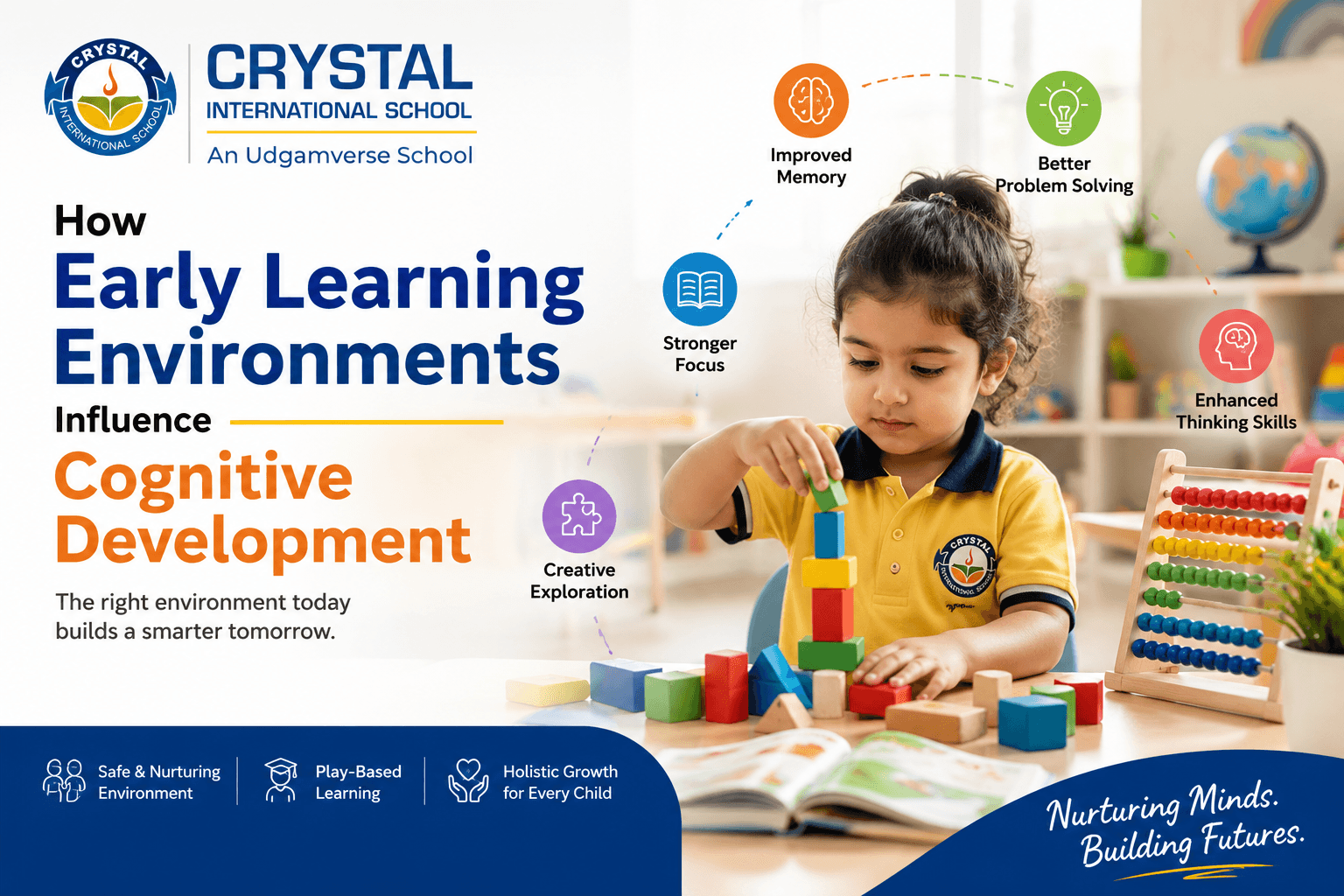
The early years of a child’s life are critical for cognitive growth and development. During this period, the brain rapidly forms connections that support learning, memory, language, and problem-solving abilities. Early learning environments play a significant role in shaping these developmental processes by providing experiences that encourage exploration, interaction, and discovery. Whether at home or in educational settings, a nurturing environment can positively influence how children think, learn, and understand the world around them. For families considering cbse school admission in Mahisagar, understanding the impact of early learning experiences can help highlight the importance of a strong educational foundation.
Understanding Cognitive Development in Early Childhood
Cognitive development refers to the growth of thinking, reasoning, memory, attention, and language skills. During early childhood, children absorb information from their surroundings and use it to build knowledge and understanding.
Several factors contribute to cognitive growth:
- Exposure to new experiences
- Meaningful interactions with adults and peers
- Opportunities for exploration
- Language-rich environments
- Structured learning activities
These experiences help children develop essential skills that support future academic and personal success.
The Role of Educational Settings in Learning
Many cbse schools in Mahisagar and similar educational institutions recognize the importance of creating environments that encourage intellectual development. Through age-appropriate activities and guided instruction, children are introduced to concepts that stimulate thinking and curiosity.
Effective learning environments often provide:
- Interactive classroom experiences
- Opportunities for hands-on learning
- Encouragement of questioning and discussion
- Exposure to diverse subjects
- Activities that promote creativity
These experiences help children engage actively with their surroundings and develop confidence in their ability to learn.
Key Elements of a Positive Learning Environment
A well-designed learning environment supports cognitive development by encouraging participation, exploration, and independent thinking. Children learn most effectively when they feel safe, engaged, and motivated.
Important elements include:
- Supportive teacher-child interactions
- Structured daily routines
- Access to educational materials
- Opportunities for social learning
- Activities that encourage problem-solving
When these factors are present, children are more likely to develop strong cognitive skills and a positive attitude toward learning.
How Learning Activities Support Cognitive Growth
| Learning Activity | Cognitive Skill Developed |
| Story Reading | Language Development |
| Puzzles and Games | Problem Solving |
| Group Discussions | Critical Thinking |
| Creative Projects | Imagination and Innovation |
| Observation Activities | Analytical Skills |
These experiences help children build a broad range of abilities that support long-term learning.
The Importance of Stimulating Experiences
Educational institutions included among the top 10 cbse schools in Mahisagar often focus on providing stimulating experiences that encourage children to think independently and explore new ideas. Exposure to different learning opportunities helps strengthen neural connections and supports intellectual growth.
Children benefit from activities that:
- Encourage exploration
- Develop curiosity
- Introduce new concepts
- Strengthen memory skills
- Promote decision-making
Such experiences help them become active participants in the learning process rather than passive observers.
Long-Term Benefits of Early Cognitive Development
The influence of early learning environments extends beyond childhood. Cognitive skills developed during the early years often serve as the foundation for future academic achievement and personal growth.
Some long-term benefits include:
- Improved learning abilities
- Stronger communication skills
- Better decision-making
- Enhanced adaptability
- Increased confidence in problem-solving
Children who develop these skills early are often better prepared to navigate future educational challenges and opportunities.
Furthermore, positive learning experiences can foster a lifelong interest in learning, encouraging individuals to continue exploring and acquiring knowledge throughout their lives.
Frequently Asked Questions
1. What is cognitive development in early childhood?
Cognitive development refers to the growth of thinking, reasoning, memory, language, and problem-solving abilities during childhood.
2. Why are early learning environments important?
They provide experiences and interactions that help children build essential cognitive skills during a critical stage of brain development.
3. How do schools support cognitive growth?
Schools offer structured activities, educational resources, and guided learning experiences that encourage intellectual development.
4. What activities help improve cognitive skills?
Reading, puzzles, discussions, creative projects, and exploration-based activities can all contribute to cognitive growth.
5. Can early cognitive development influence future success?
Yes. Strong cognitive skills can support academic achievement, communication, problem-solving, and lifelong learning.
Conclusion
Early learning environments have a profound influence on cognitive development by providing experiences that support thinking, learning, memory, and problem-solving. Through meaningful interactions, structured activities, and opportunities for exploration, children develop essential skills that contribute to future success. Understanding the importance of these formative experiences can help families make informed educational choices. For those reviewing the list of best cbse schools in Mahisagar, evaluating how institutions support cognitive development can be an important consideration. Educational institutions such as Crystalschool play a role in fostering learning environments that encourage intellectual growth and lifelong curiosity.